ARCC Research Project
Project Description:
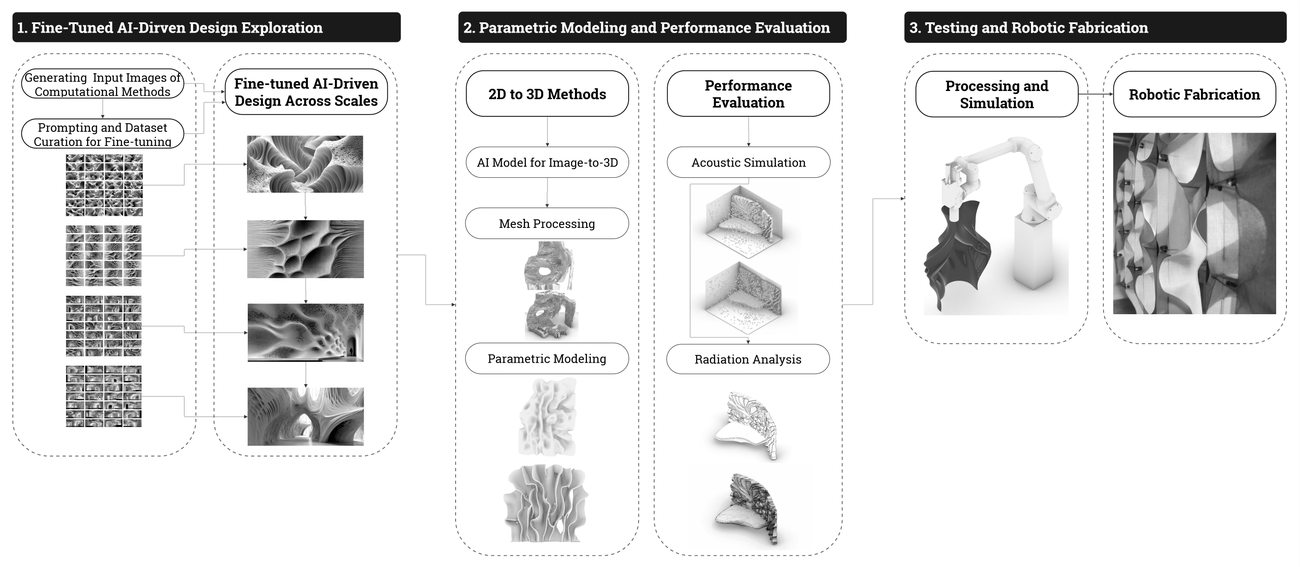
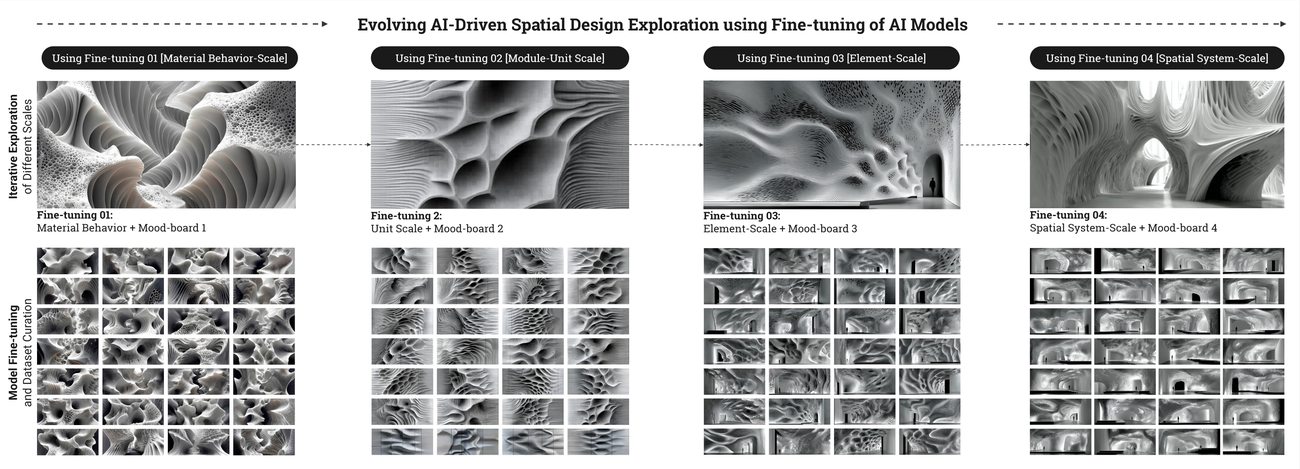
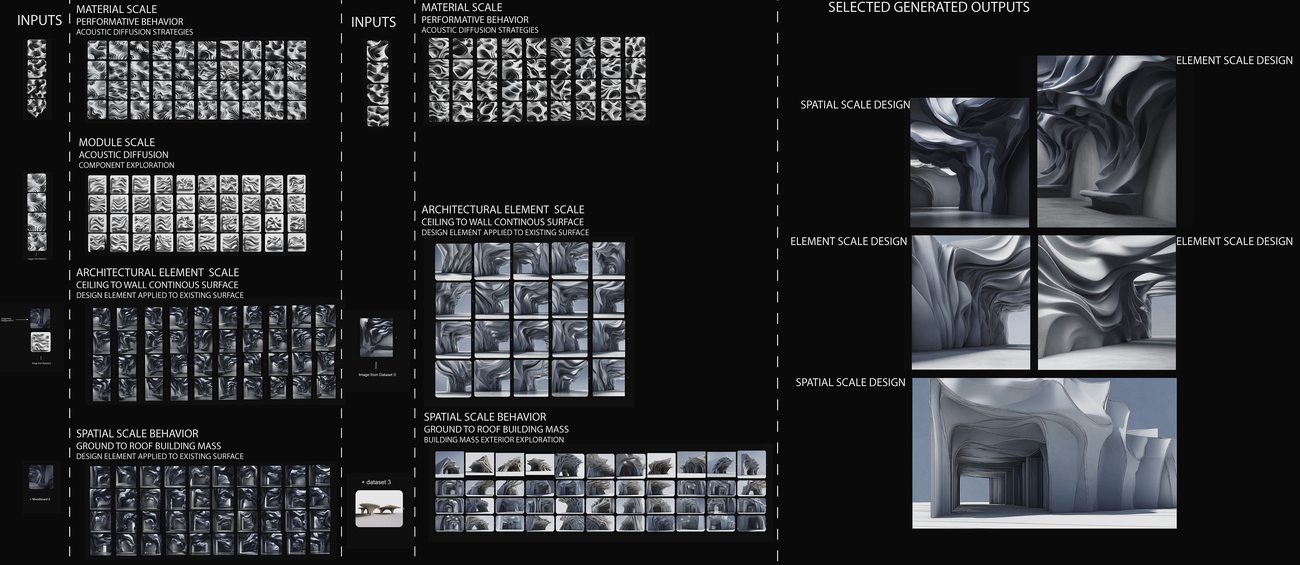
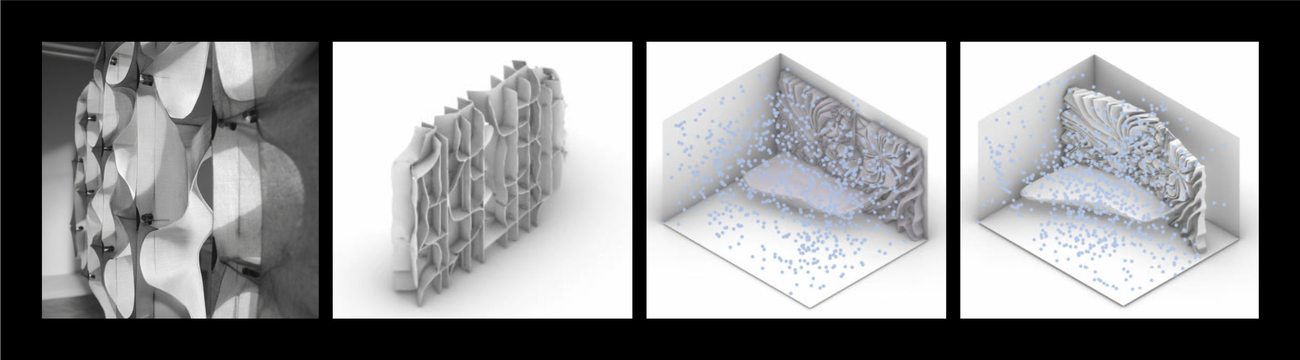
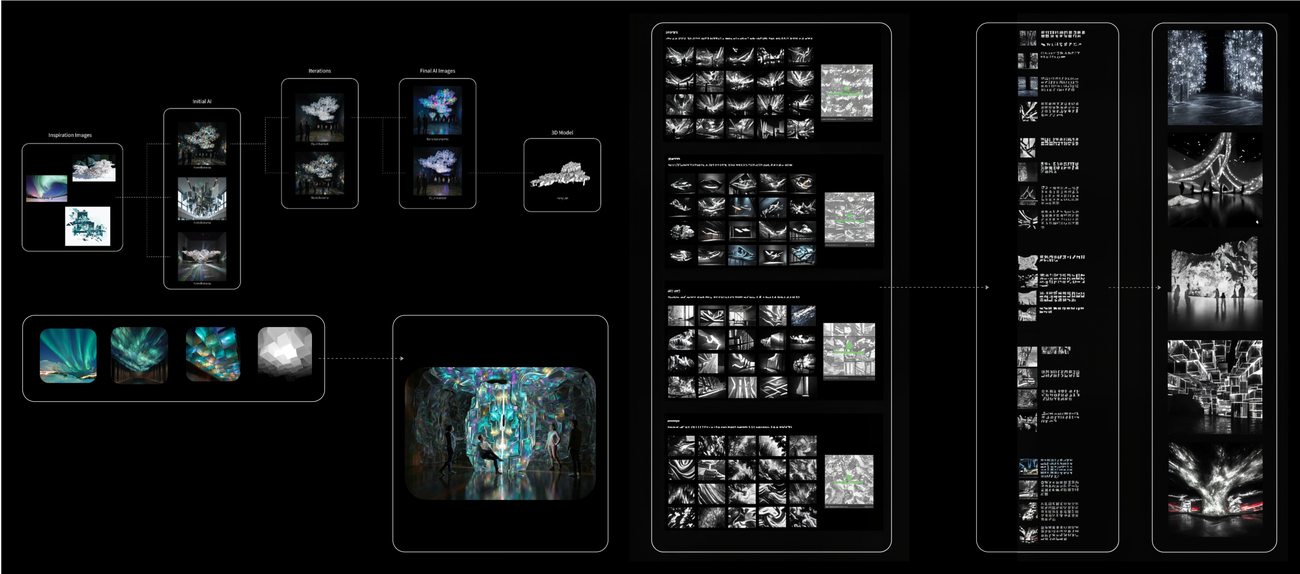
Abstract: Generative diffusion models have been disrupting architectural practice, producing visually persuasive imagery through statistical inference over vast datasets. Yet these models remain fundamentally representational systems whose outputs frequently lack disciplinary specificity, tectonic logic, or environmental reasoning. This paper introduces a methodological framework for fine-tuning generative AI within architectural design workflows through curated datasets, Low-Rank Adaptation (LoRA) training, and Midjourney AI mood-boards for a guided and performance-driven AI design exploration. Rather than treating AI as a mere image generator, the research positions it as a specialized design collaborator trained through the designer’s domain-specific visual knowledge. The study proposes a multi-scale generative workflow in which architectural design tasks are structured across four levels of spatial design reasoning: material scale, modular unit scale, architectural element scale, and spatial system scale. At each stage, generative models are guided through curated datasets and fine-tuned models to ensure that AI outputs progressively transition from material articulation to spatial organization. The framework was implemented within an experimental elective course in architectural design, where students developed Midjourney mood-board datasets, trained LoRA models, and employed AI-driven generative processes to produce design artifacts across these scales. The pedagogical experiment demonstrates that fine-tuned generative AI can move beyond stylistic speculation toward structured design reasoning when guided through scale-aware workflows. The study contributes to emerging discourse on AI in architectural design by proposing a model of computational authorship grounded in dataset curation, model calibration, and multi-scale spatial reasoning, reframing the architect as an orchestrator of generative intelligence.