

ACSA Research Project
Project Description:
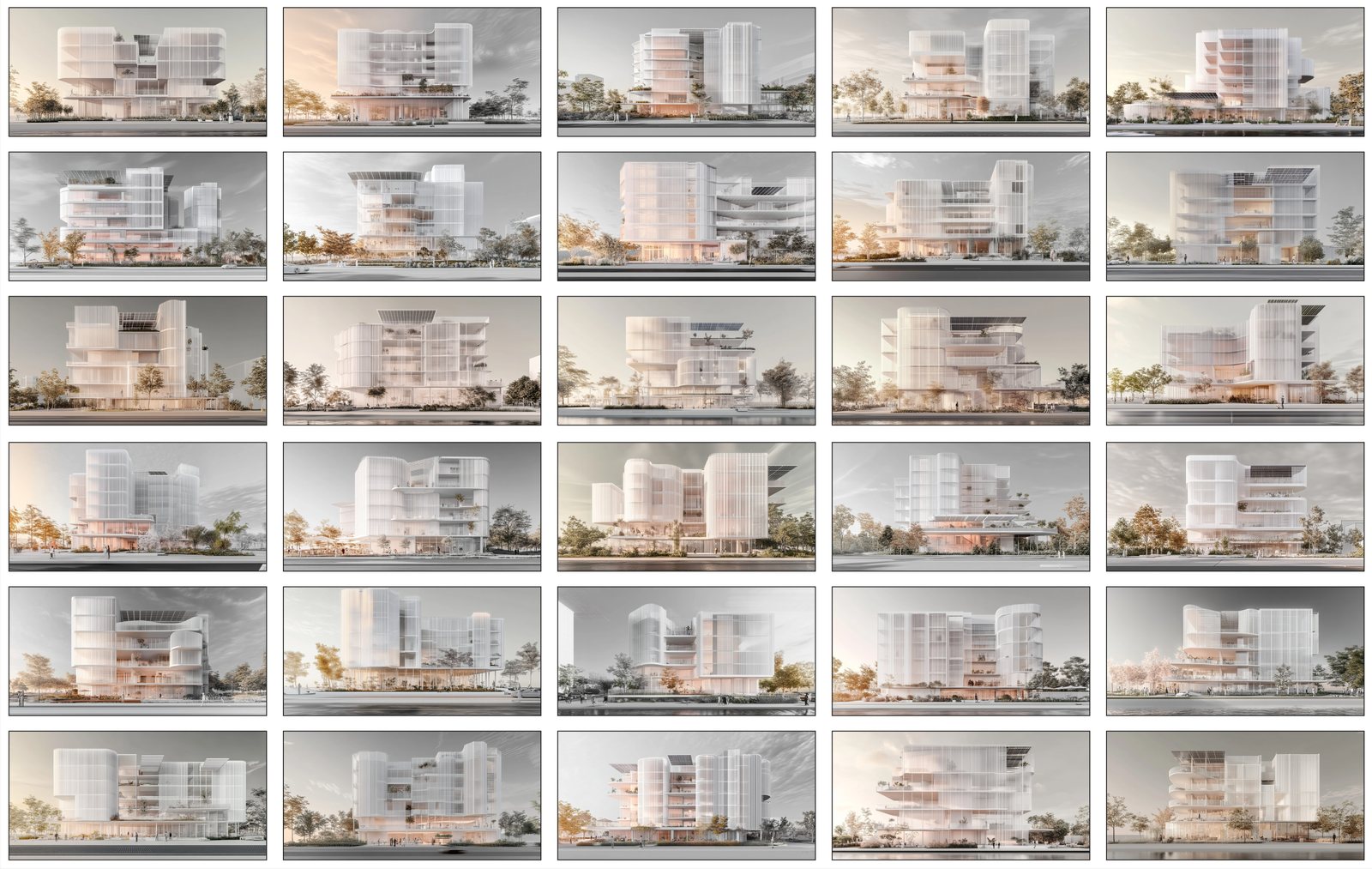
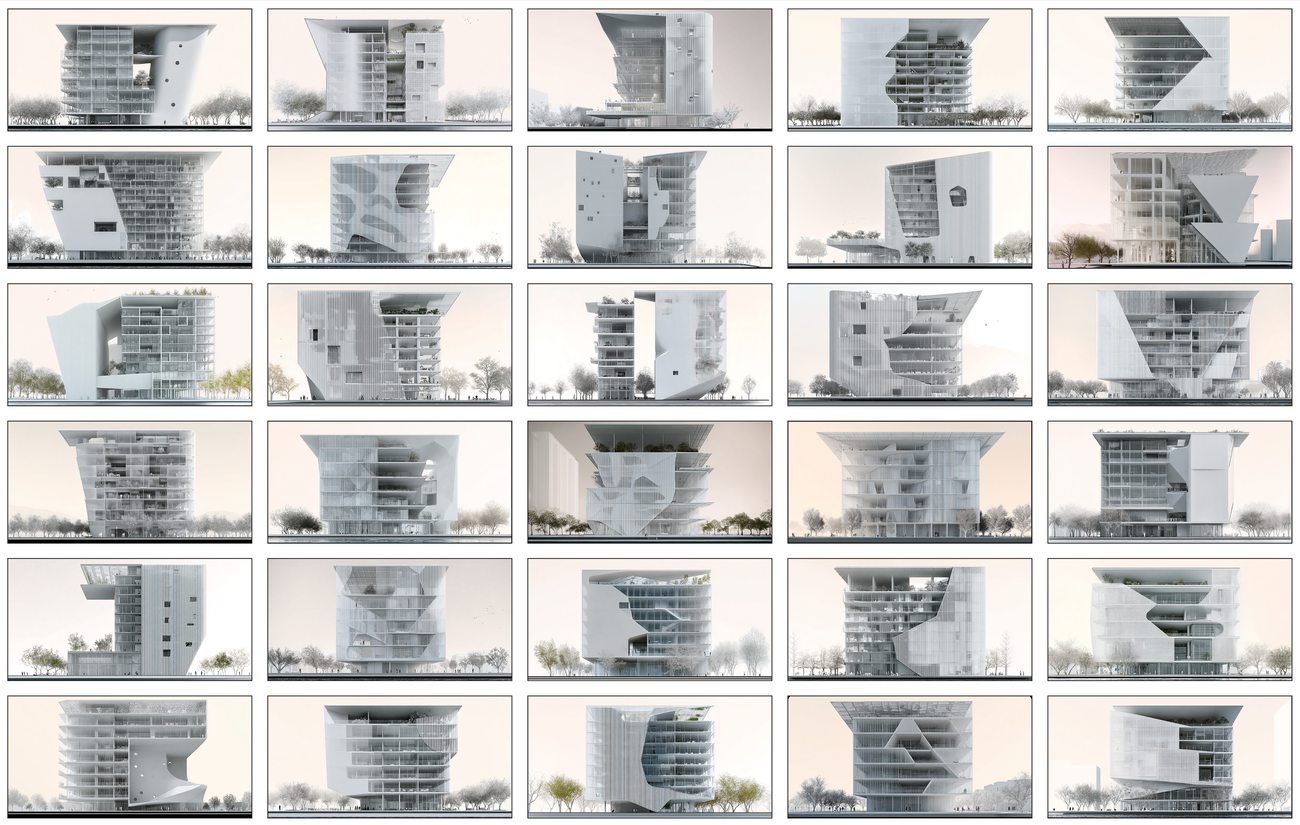
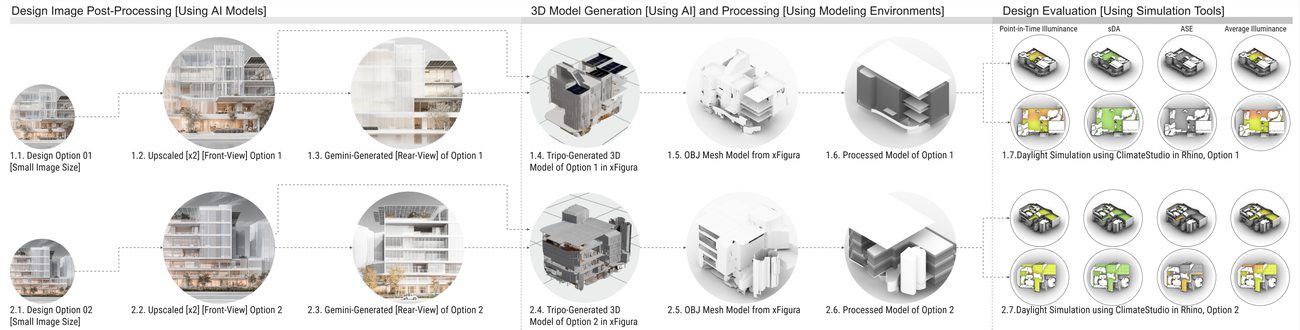
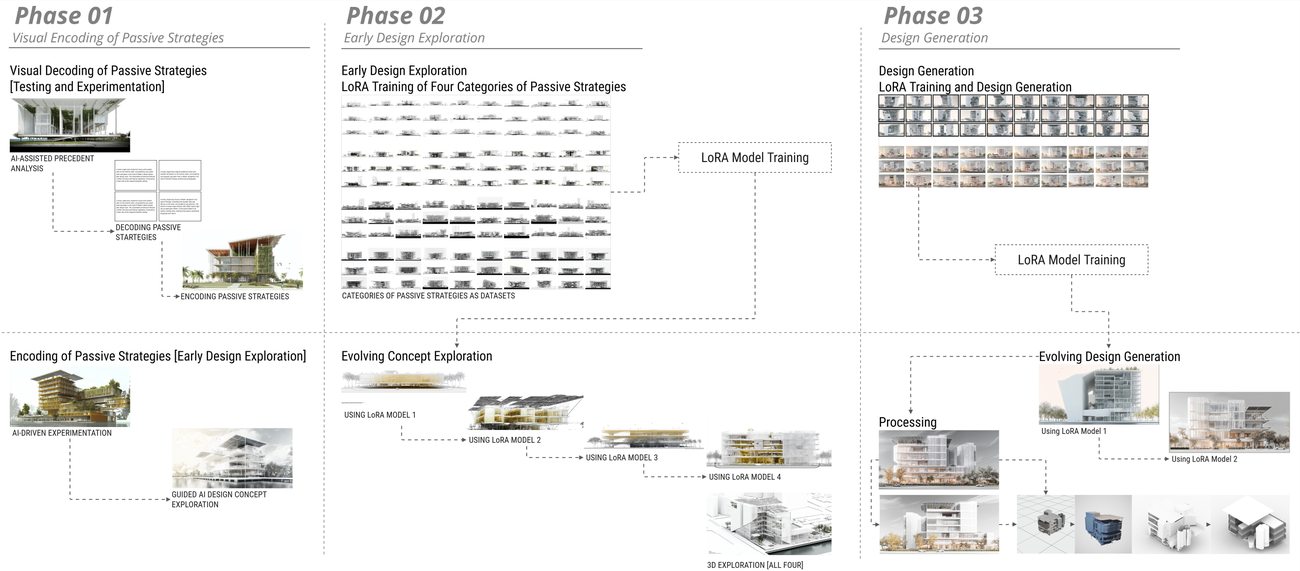
Abstract: This research probes the extent to which diffusion models can be leveraged to transcend their representational capabilities to engage with the deeper logic of passive environmental design. It investigates how artificial intelligence can be operationalized to internalize, encode, and articulate resilient passive architectural design principles. To enable this, a novel design workflow was developed, integrating structured semantic prompting for controlled image generation, LoRA (Low-Rank Adaptation)-based fine-tuning for model specialization, and translation pipelines from image output to 3D geometric representation. The framework unfolds across iterative phases of AI-driven design generation, employing multiple trained LoRA models, each tailored to a specifically investigated passive strategy to control the generative process. Integrated into the workflow is environmental simulation, particularly daylight analysis, used to evaluate the expected performance of generated design outcomes. Testing of the prototyped framework was conducted through its application to a design problem in the subtropical climate of Southeast Florida, as discussed in the paper. A central contribution of this work lies in its redefinition of the architect’s agency within a human–machine collaboration continuum, situating the designer as an active mediator and curator of ecologically attuned design, and in doing so reframing diffusion models not as instruments of formal novelty but as collaborative agents in designing environmentally responsive architecture.